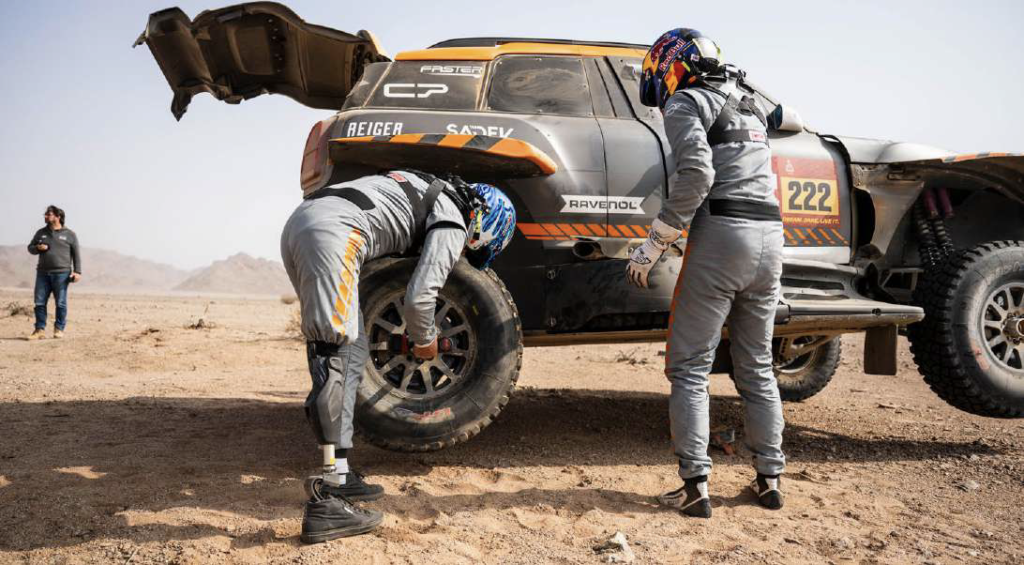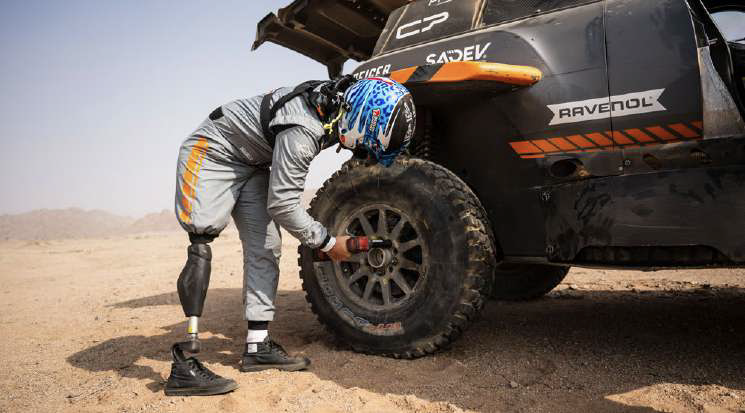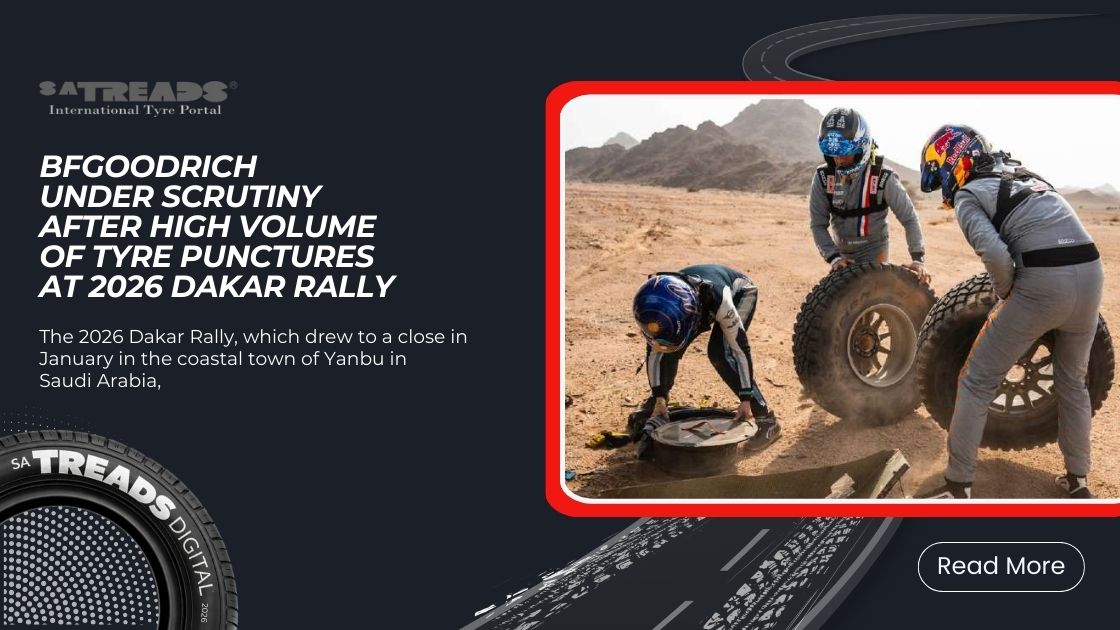
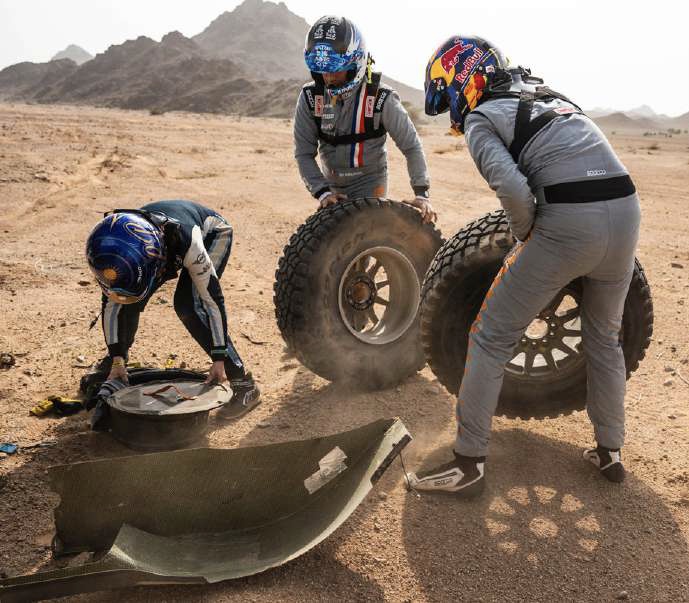
The 2026 Dakar Rally, which drew to a close in January in the coastal town of Yanbu in Saudi Arabia, proved to be one of the most demanding in recent memory, according to crews who described the rocky terrain and deep dune systems as challenging. To add to that, this year saw a higher volume of tyre punctures along the way, causing concern for the competitors.

All three South African Toyota Hilux crews finished. Saood Variawa and Francois Cazalet led the team’s overall performance, finishing 10th overall and making Variawa the top-placed South African driver at Dakar 2026. This, according to Toyota Gazoo Racing and www.motorsport.co.za.
Said Variawa: “It was a very long and tough race, but I am encouraged by the progress made. It’s my third Dakar and my third finish.” He went on to say that were it not for a combination of punctures, a damaged driveshaft and time lost in navigationheavy sections, the pairing showed pace capable of challenging well inside the overall top five.
HOW BFGOODRICH PERFORMED
Once again BFGoodrich dominated the 2026 Rally, with the BFGoodrich KDR2+ used by top competitors to navigate, varied, extreme terrain. Nasser Al-Attiyah and Fabian Lurquin secured victory on the specialized 35-inch KDR2+ tyres, – regarded as the pinnacle of BFGoodrich’s racing, off road and performance line up – thereby reinforcing the brand’s reputation for extreme durability in the world’s toughest race.
“The tyres provided high-level endurance, managing rapid changes from loose sand to sharp, technical and rocky patches,” they said.
But faith in the tyre brand was not shared by all.
During the first week of the 2026 Dakar Rally there were numerous tyre failures, affecting almost every team and vehicle in the top class, with some drivers experiencing multiple punctures in a single day. This led to pit stops for tyre changes being introduced on some stages, as some teams were even struggling to complete the distance. This led to some drivers describing the race as a ‘lottery’, with sharp criticism being levelled at the tyre manufacturer.
“We are not happy with BFGoodrich at all,” claimed Joan Navarro, head engineer at M-Sport Ford, in an interview with Motorsport.com. “The tyre is a new one, not the same as last year.
“They developed it further over the course of the year. We used this tyre for the first time in October at the Rallye du Maroc. That was very last-minute. We couldn’t react, couldn’t do anything.
“We said from the start that this tyre wasn’t validated, because to start at Dakar, a tyre must be validated. Normally, we validate every component over more than 5 000km, and this tyre simply wasn’t validated.”
For the new tyre, BFGoodrich changed the internal structure. The goal was to reduce damage to the tread surface, which had been a recurring issue in past years.
“These are situations that are very hard to manage from a driver’s perspective. But one thing is certain. BFGoodrich really tried to tackle and fix old problem. Unfortunately, that seems to have created a new one.”
Conversely, Toyota team manager Jan Verhaegen believes the cause of the high volume of punctures was due to the type of stones found along the route, rather than in the design.
“What I’m hearing from the guys, and I’ve been on the ground myself, is that you come across some razor-sharp stones out there,” he explained. “Those black, flat stones, I’d almost call them ceramic-like, are the culprit. When you drive over them, the front tyre flicks them up and the rear one catches them. So, in short, I would clearly attribute this to the terrain, not BFG.
“We have observed that most, if not all, of the punctures occur on the sidewall. Perhaps the sidewall is the area that still needs strengthening. It’s a learning process for next year.
“Primarily, it’s up to rally director David Castera to decide where the route takes competitors via the roadbook.”