
NDUDUZO CHALA ON WHY EVEN PLAYING FIELD REMAINS INEQUITABLE

When anti-dumping duties on Chinese imports became effective in 2023, the local tyre makers had hoped their implementation would make for a more even playing field. But just how effective did this protection measure prove to be? And what other factors may be threatening their survival? The closure of the Goodyear plant in Uitenhage, last year, points to critical challenges, posing a massive threat to the sustainability and longevity of the country’s remaining three tyre producers.
A shifting market dynamic coupled with inadequate support from those in authority, that do not appear fully aware of the consequences, is proving a source of frustration. So, where does this leave Bridgestone, Dunlop and Continental Tyre South Africa? Nduduzo Chala Managing Executive of the South African Tyre Manufacturers Conference (SATMC), weighs in.
The growing number of cheap imports coming in from China is testing the local tyre producers, threatening their ability to compete in a price-sensitive market. What is the current ratio of imports versus locally produced tyres?
Based on 2025 figures, 12.5 million units were sold into the market, with 10.5 million units generated by the replacement market. The South African market is sizeable, but very competitive. Imports have overtaken local producers, with a majority market share of just over 60 percent in 2025.
Have the anti-dumping duties on Chinese tyres had the desired effect?
Regrettably, not. When the antidumping duties came into effect, When anti-dumping duties on Chinese imports became effective in 2023, the local tyre makers had hoped their implementation would make for a more even playing field.
But just how effective did this protection measure prove to be? And what other factors may be threatening their survival? The closure of the Goodyear plant in Uitenhage, last year, points to critical challenges, posing a massive threat to the sustainability and longevity of the country’s remaining three tyre producers. the industry observed numerous circumventions to the dumping duties. Firstly, the industry observed tyres imported from China as a “tyre and rim” combo, which attracted less duties.
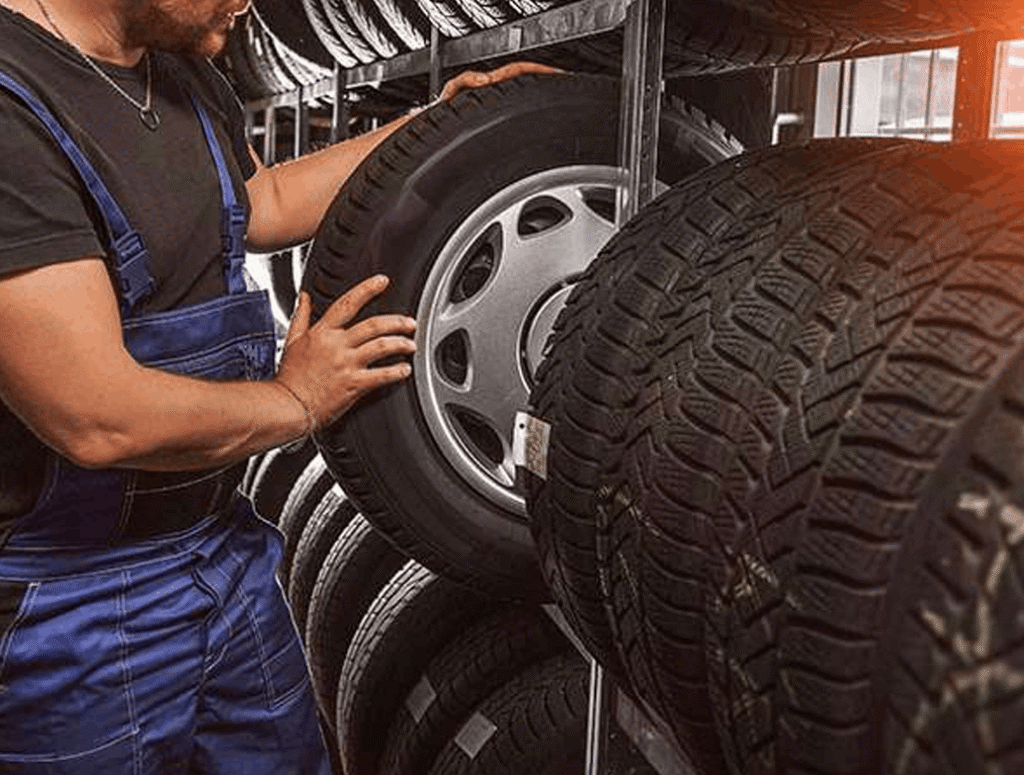
These were later stripped and off and sold separately, a practice prohibited by the International Trade Association Commission (ITAC) and the South African Revenue Services (SARS). This was addressed by the industry with import control measures being placed by ITAC on the importation of “tyre and rim” configurations. Secondly, the industry engaged with ITAC and SARS on certain loopholes in the implementation of the imposed dumping duties, as a result of one Chinese factory being exempt from imposition of dumping duties.
The industry has observed an increase of imported brands that are related to the exempt Chinese factory, and this has still not been addressed. Finally, the industry observed a change in trade patterns, with Chinese producers shifting their operations/imports from China to Thailand, Cambodia and Vietnam, in order to circumvent dumping duties.
This change in trade pattern is referred to as “Country Hopping” and the industry engaged once again engaged with ITAC to conduct an independent assessment, as this was causing significant injury to the local market. After 18 months of intense effort and investigation by ITAC, there was no dumping duties imposed to Thailand, Cambodia and Vietnam.
This means that local tyre producers will continue to face unfair trade dynamics in the domestic market. To answer the question succinctly, the impact would have been seen had there been better implementation and less loopholes observed. To be clear, the local tyre manufacturers are not opposed to imports and/or competition for so long as it is fair for all.
Well, yes, after all, the local tyre makers are, by definition, importers themselves.
Correct. The main objective of the SATMC and the local tyre producers was not to limit competition but to address the unfair trade and price undercutting by imports from China, and lately from Thailand, Vietnam and Cambodia as well.
So, what’s next?
The loopholes that exist, that allow for rules to be broken, present massive challenges. We need to find another mechanism – aside from imposing anti-dumping duties – to tackle the problem and are currently in discussions with the relevant authorities on this.
The local tyre producers are responsible for over four thousand direct employees, significant investments into SA every year and play a crucial role in the sustainability of the South African Automotive Sector. Speedy collaboration with government to find and implement solutions, is a MUST. The survival of local tyre production in South Africa is dependent on it.
Have you identified a possible mechanism that could prove effective?
The industry has engaged with the Minister of Trade, Industry and Competition (the dtic) on priority measures that MUST be put in place over the next three to six months, notwithstanding that the SAAM35/ APDP policy review is currently being conducted, which should be completed by end of 2026.
The entire industry requires an “All hands-on deck” approach, with all industry players and relevant government department, particularly, the dtic and its units, National Treasury, and Department of Forestry, Fisheries and the Environment to act with agility and support the industry.
What is your view on supply to the OE market, given the proliferation of new vehicle makes from the Far East?
If we compare 2015 to the present, Asian vehicles have grown exponentially. The challenge is that these vehicles come already fitted with tyres. So this limits growth and capacity utilization for local tyre producers. One of the SAAM35 objectives is to increase localization levels to 60% by 2035. Having a stable local tyre supply to the OEM market is critical to ensure we edge closer to this objective. The SATMC position is that there should be mandated localization for OEMs in order to ensure the progression takes place and this must be tied to government incentives.
In your view, why is it important for us to not lose the local tyre manufacturing industry?
The automotive manufacturing sector contributed 5.2 percent to the GDP in 2024, and the local tyre producers are a key contributor to this. Unemployment is very high in South Africa, job losses are majorly significant for the country, with one person often bringing in income for an entire family. The knock-on effect is far reaching.
Bear in mind, that for a country to grow, it needs a strong manufacturing/ industrial base. Should we lose this (local tyre production competence), South Africa will become a consumer of another economy’s production, resulting in low economic growth and the loss of skills and competence that we will never get back.
How are local tyre makers responding to this perceived threat?
The three local tyre producers are all implementing their own strategies, based on market dynamics and global direction. However, over and above the direct tyre producers market strategies, the key topics at the moment:
- Completing the process of the SAAM35/APDP Policy review: For automotive sector policy to include aftermarket incentives, particularly for tyres.
- Government support for designation of tyres through the Preferential procurement Framework: Government to prioritise purchasing local tyres for government vehicles/fleet.
- Unlocking and taking advantage of the opportunities that exist through the African Continental Free Trade Area (AfCFTA): Natural Rubber offtake arrangement with West African countries, in exchange for market access.
- The consumer awareness and decision of buying local is key during these times, please check out the SATMC’s “HomeGrown#DrivingLocal”.
To sum up, what do you believe needs to happen to support them and prevent future casualties?
We require a much greater level of support an engagement from government and their institutions. Bureaucracy is hampering the industry and the systems in place are not effective. Critical issues such as unfair trading in the domestic tyre market, imports of second-hand tyres – which remain unregulated – and addressing the evergrowing problem of waste tyres and reaching a viable solution to their collection and disposal, need urgent intervention. There is no time to waste. We need swift, decisive action.